Clay paint 0-0,2 mm
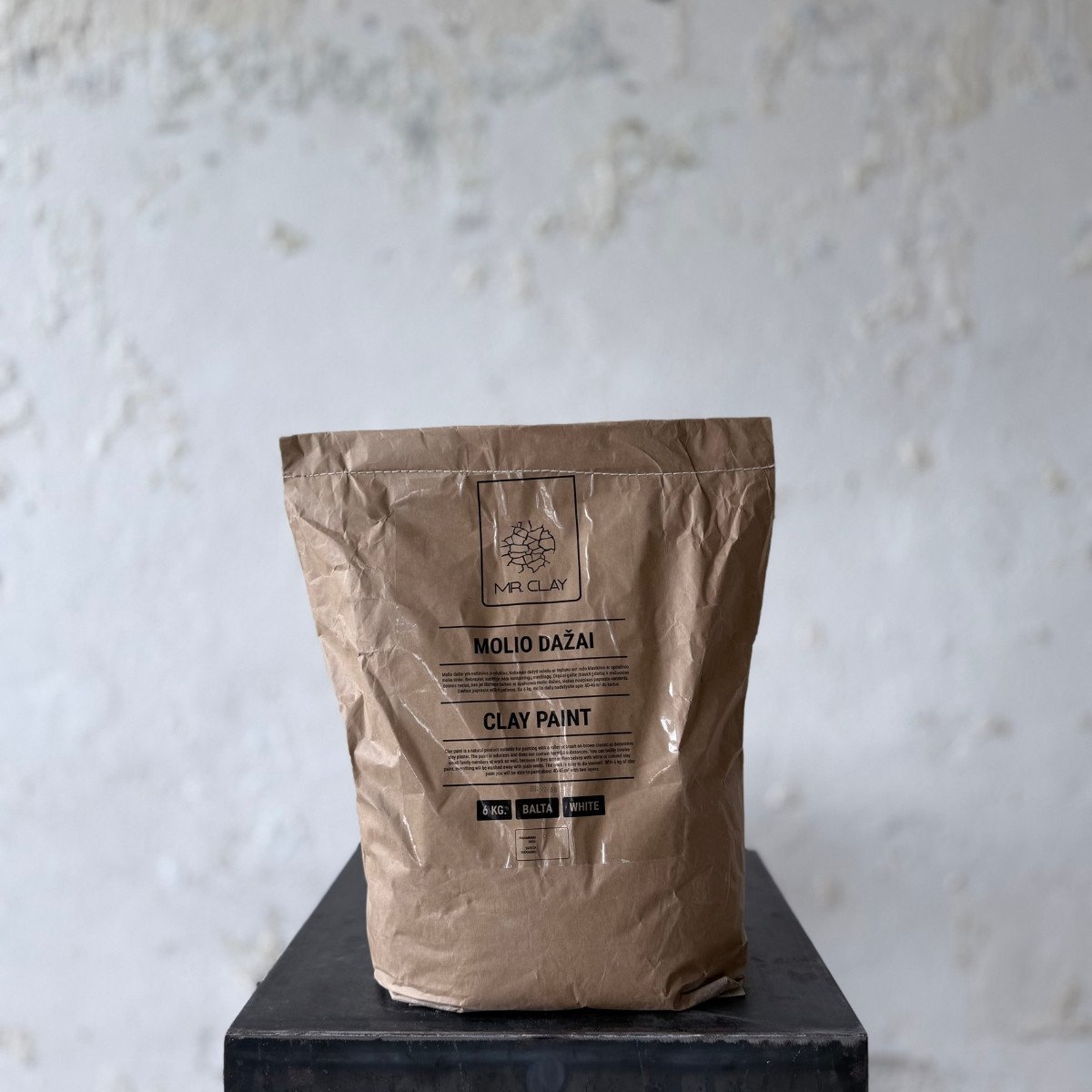
Clay paint is a dry mineral mixture intended for interior wall finishing. It can be applied with a roller, brush, or suitable spraying equipment onto brown classic clay plaster, decorative clay plaster, or other surfaces. It is odorless and contains no harmful substances. The work is easy to do yourself. The product is natural and vapor-permeable, absorbs liquids, and is therefore suitable only for dry rooms where there is no direct contact with water, dirt, or grease. To improve durability and performance, it must be additionally varnished with Mr. Clay Varnish No. 1.
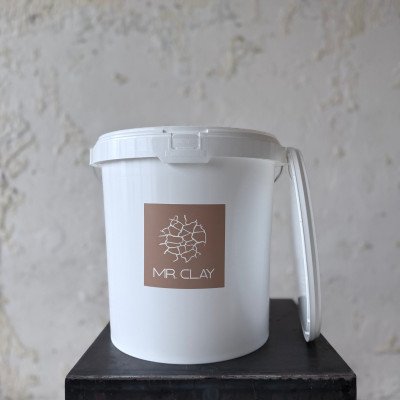
When you order clay paint in a chosen color, you will receive a base-colored clay mixture and a separate jar of pigment. Since the color pigments are custom-made according to your order, they cannot be exchanged or returned.
Clay paint is a dry mineral mixture intended for interior wall finishing. It can be applied with a roller, brush, or suitable spraying equipment onto brown classic clay plaster, decorative clay plaster, or other surfaces. It is odorless and contains no harmful substances. The work is easy to do yourself. The product is natural and vapor-permeable, absorbs liquids, and is therefore suitable only for dry rooms where there is no direct contact with water, dirt, or grease. To improve durability and performance, it must be additionally varnished with Mr. Clay Varnish No. 1.
When you order clay paint in a chosen color, you will receive a base-colored clay mixture and a separate jar of pigment. Since the color pigments are custom-made according to your order, they cannot be exchanged or returned.

Safe purchase
.svg)
Home delivery

Refund
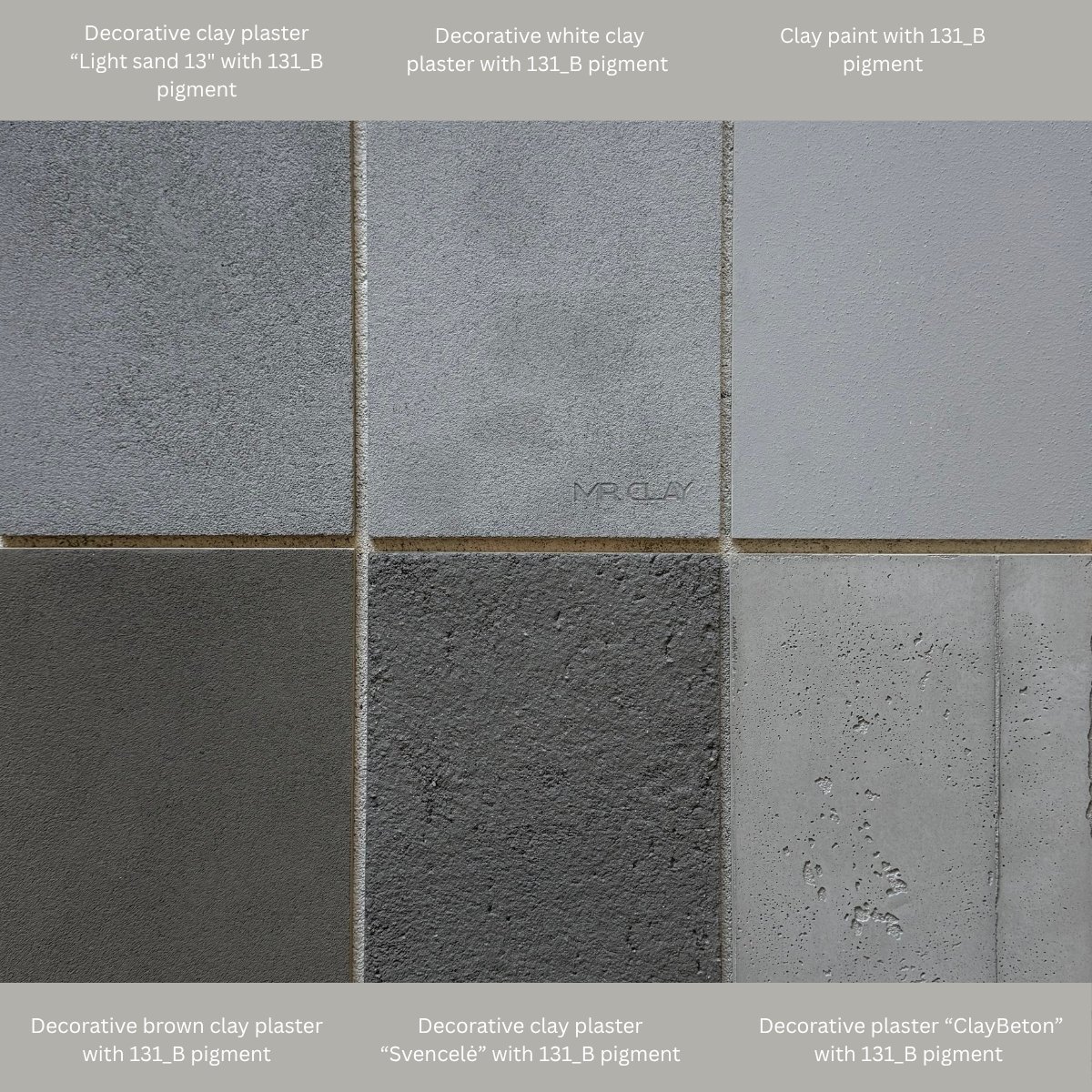
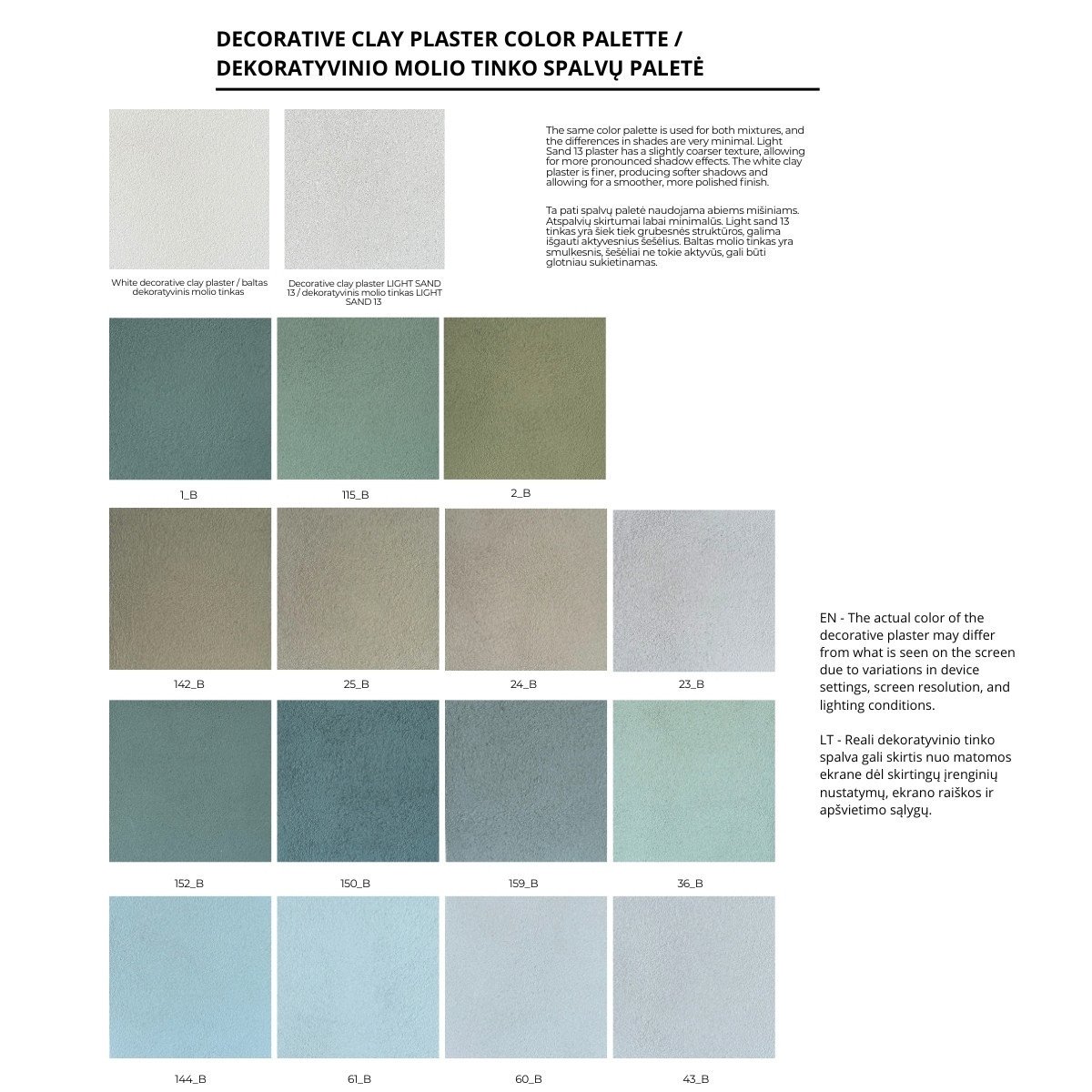
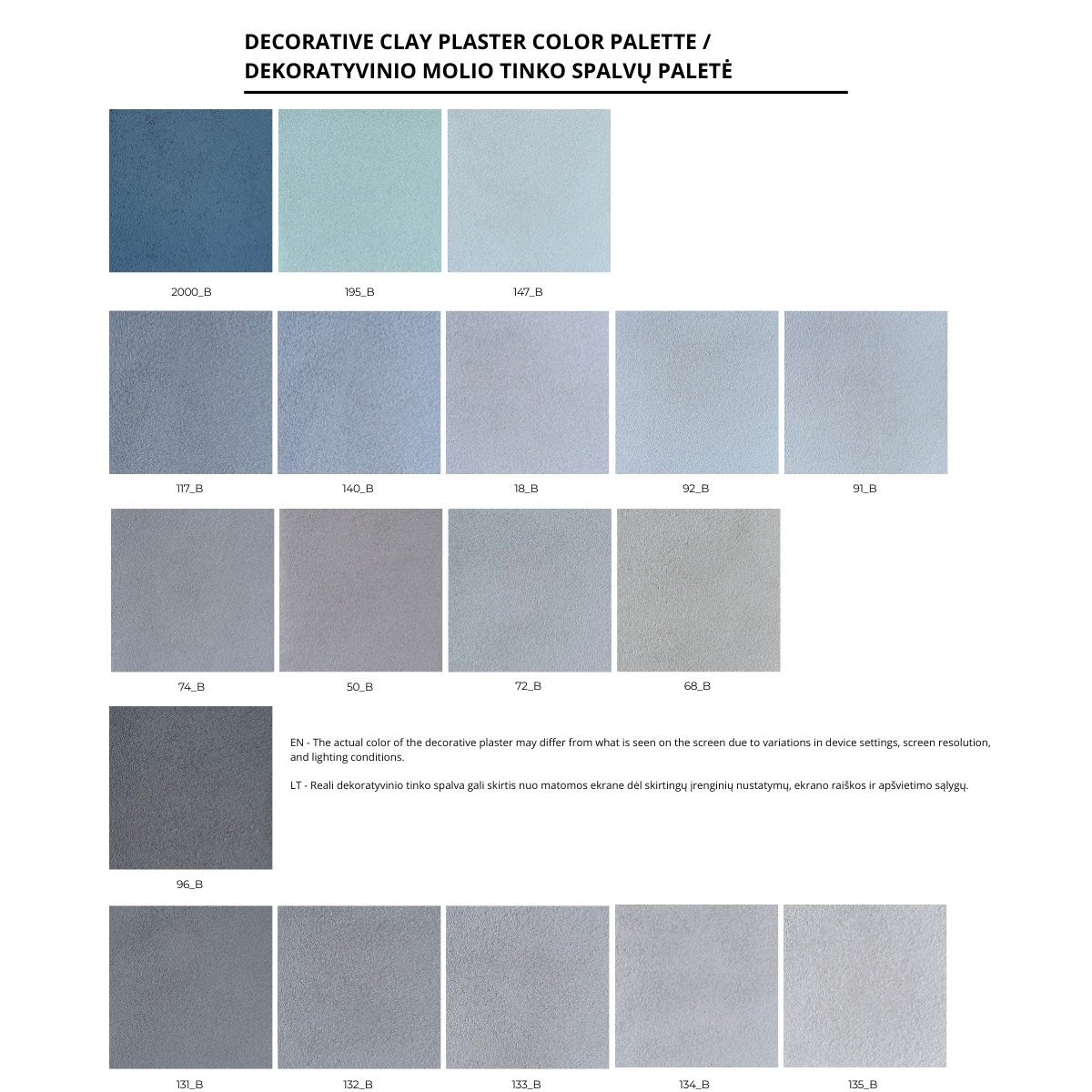
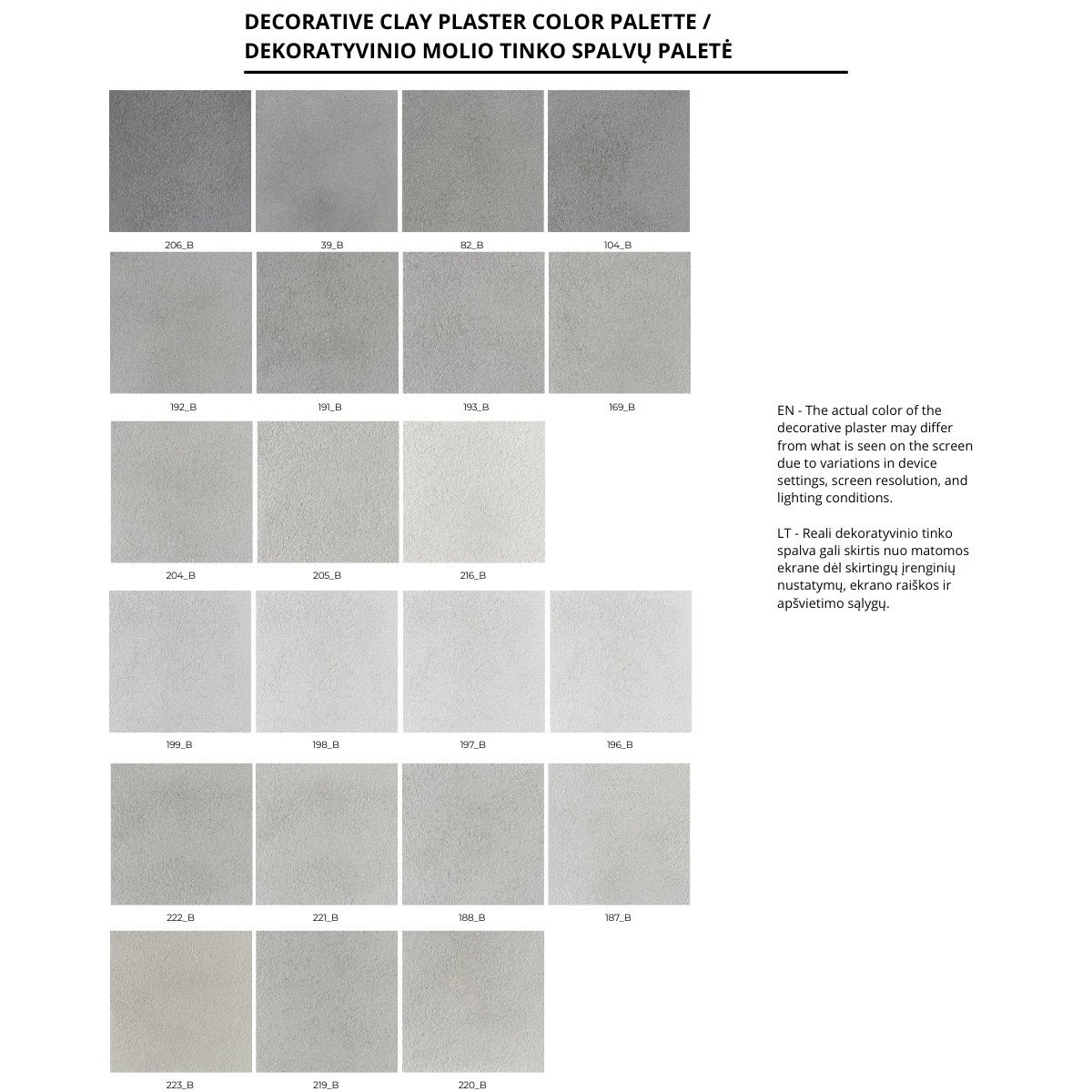
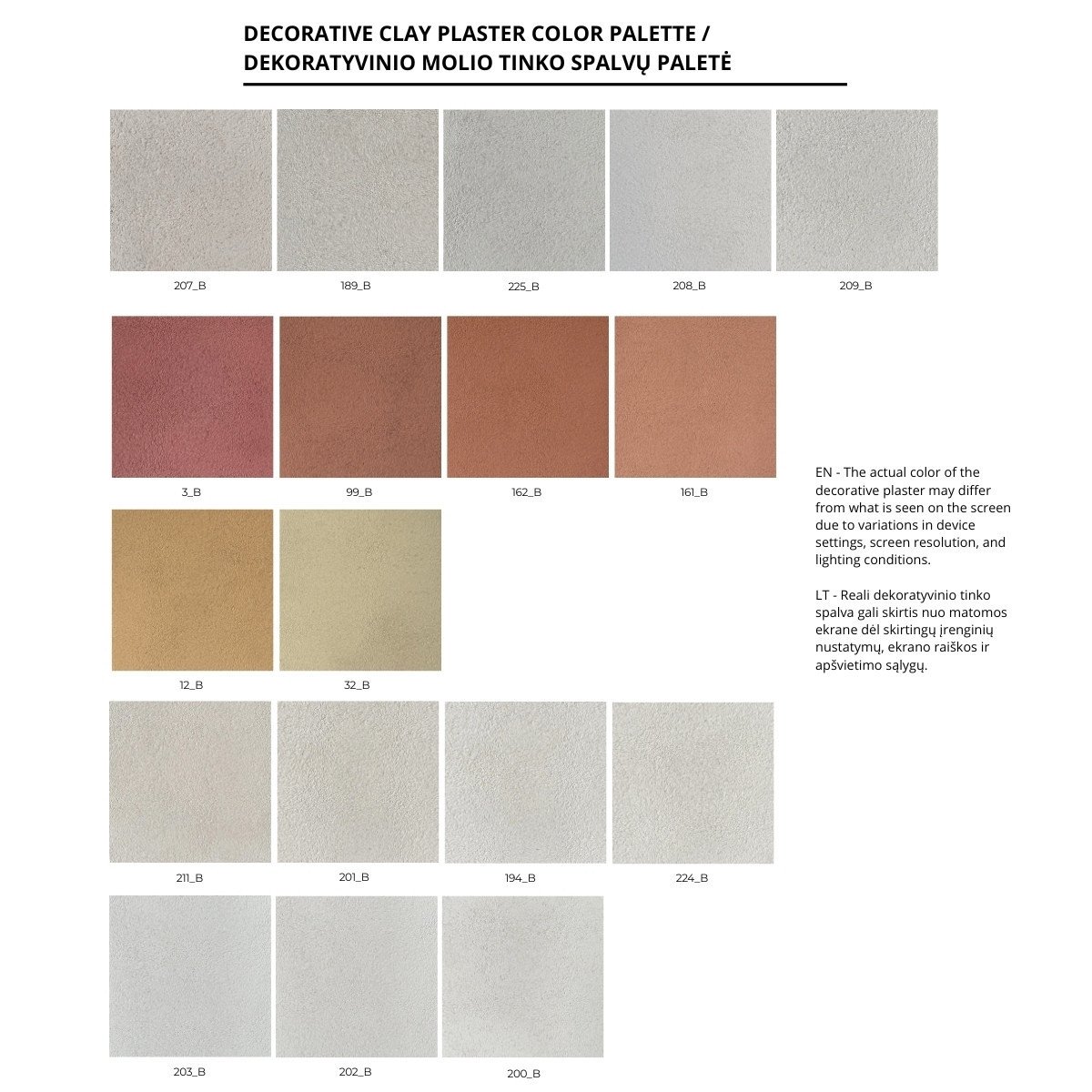
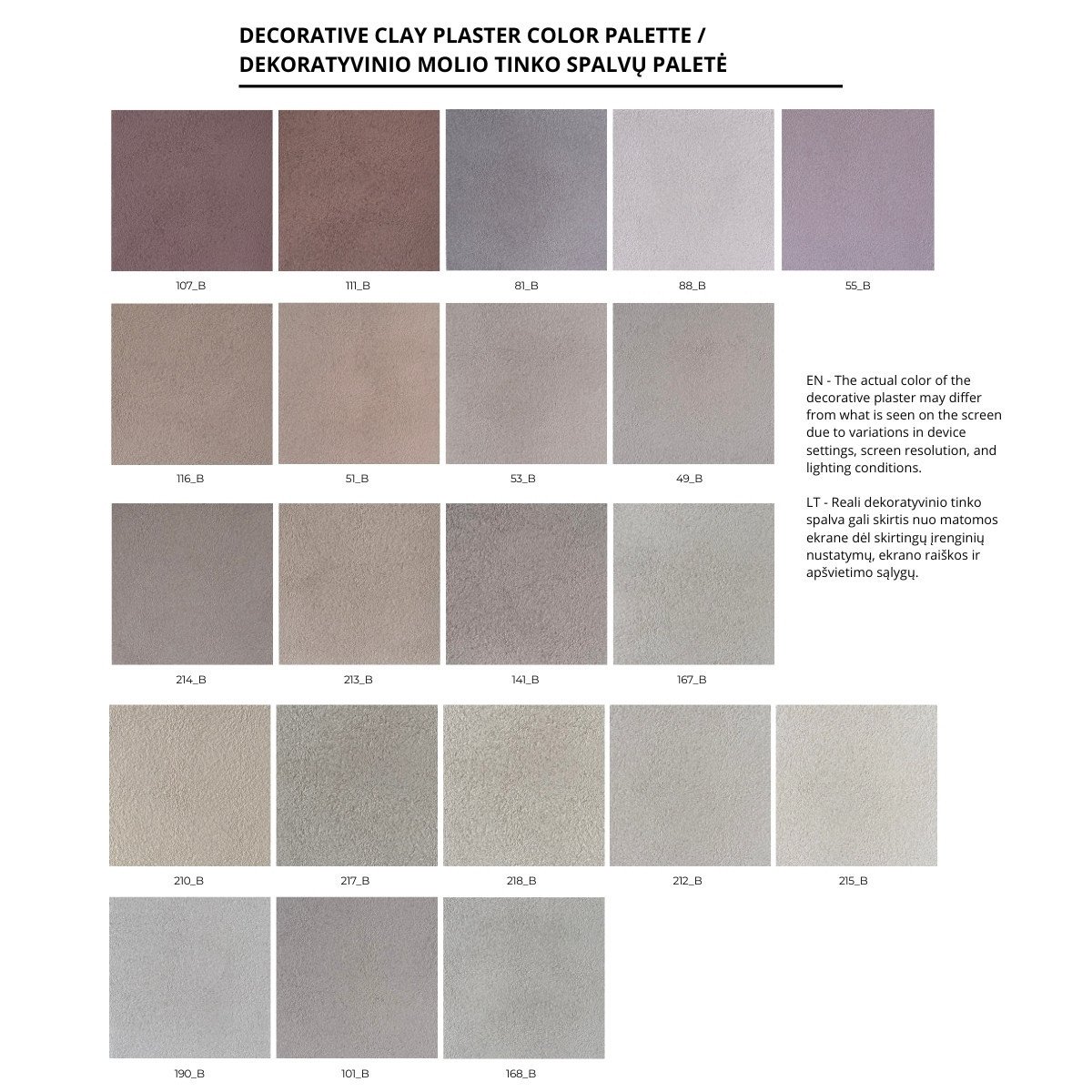
There is no separate color palette for clay paints — when choosing colors, the decorative white clay plaster color palette is used as a reference. The colors are not identical but very closely related. To be sure about the shade, we recommend purchasing a 400 g sample pack and testing it.
IMPORTANT!
Although clay paint can be made in all pigment colors, we recommend choosing lighter shades whenever possible. For example, when selecting very bright colors such as 1_B, 2_B, 3_B, 2000_B, etc., the painted surface may smudge if rubbed more vigorously. Additionally, such a high amount of pigment is harder to mix evenly into clay paint due to the very fine particle size of the mixture.
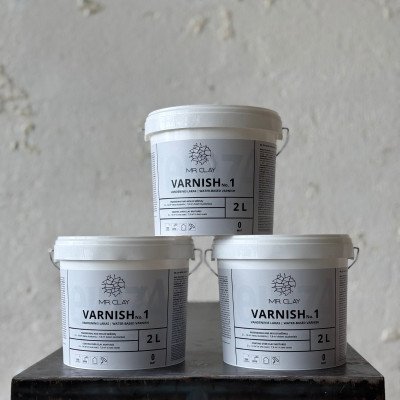
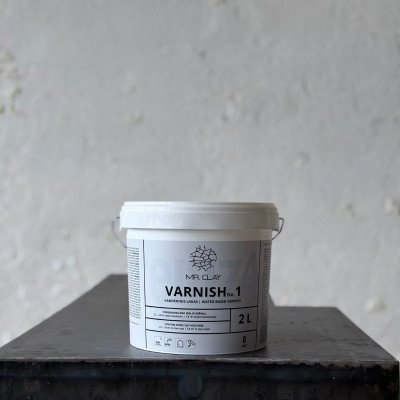
There is really no need to varnish clay plaster walls — it all depends on your lifestyle and your specific needs.
If you want completely natural and vapor-permeable walls, don’t use any varnish. Simply read our recommendations on how to clean and repair natural walls — trust us, they can stay beautiful and clean for many years.
If you need durable, wet-washable walls — for example, in high-traffic areas or commercial spaces — be sure to varnish the surfaces with Mr. Clay Varnish No. 1.
You can find more information about varnishing HERE
They differ in their base colors: one is light sand–colored, and the other is warm white. When tinted with the same pigments, the resulting shades are very similar. The biggest difference is that Light Sand 13 dries more slowly during application and creates slightly more shading, which is why it is currently the most popular mixture for finishing large wall and ceiling areas.
White decorative clay plaster is an excellent choice if you need a white base, softer shading, or if you’ll be doing highly compressed decorative techniques. But in most cases, both mixtures can be used for almost any technique.
Clay plaster “breathes” — it absorbs and releases moisture, which makes it very beneficial for maintaining a healthy indoor microclimate. If the surface is not varnished, it remains slightly more sensitive to mechanical impact, but it does not crumble or smear. An occasional loose marble grain falling off is completely normal for a natural product.
If the surface feels noticeably dusty or smudgy when touched, it means something was not done quite correctly during the finishing process. In that case, you can try a few additional steps: brush off the loose marble grains with a dry brush or clean palm, or thoroughly moisten the wall and compress the entire surface using a stainless-steel trowel to harden it.
Of course, you can always varnish the wall to fully stabilize the clay plaster if vapor-permeability is not essential for your wall finish.
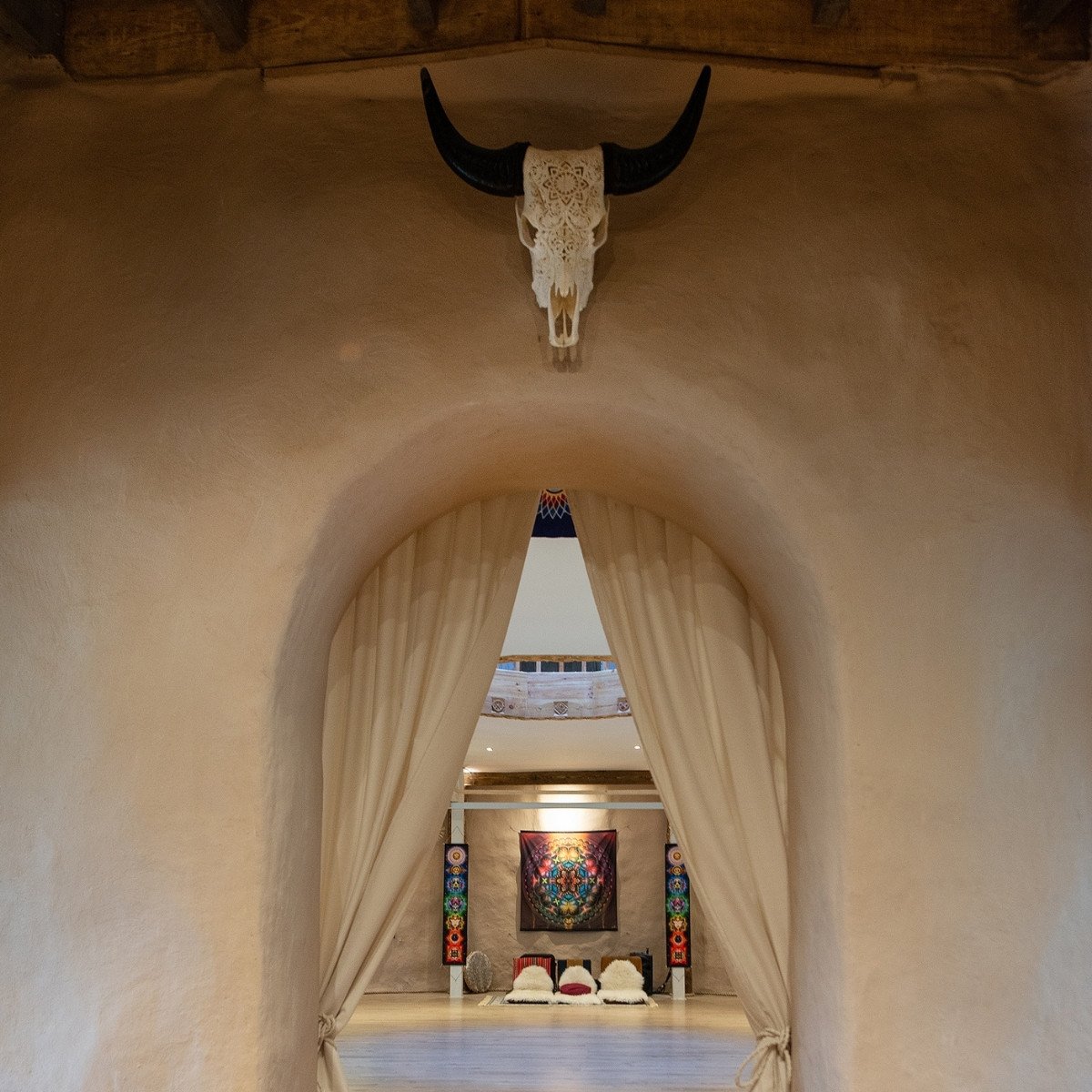
Yes, most people choose to finish all the walls and ceilings in their home with clay plaster. The result is incredibly beautiful and cozy! The walls create soft, warm shading — just enough to add charm, but not so much that it becomes overwhelming. You’ll never get tired of it. On the contrary — as our clients say, you’ll want to come home just because of your walls and won’t be able to look at flat-painted ones anymore! :)
You cannot use clay plaster or this varnish in the shower area, near the bathtub, or in any zone with frequent direct water contact and high steam concentration. These areas are not suitable for clay plaster or its varnish.
In the bathroom in general:
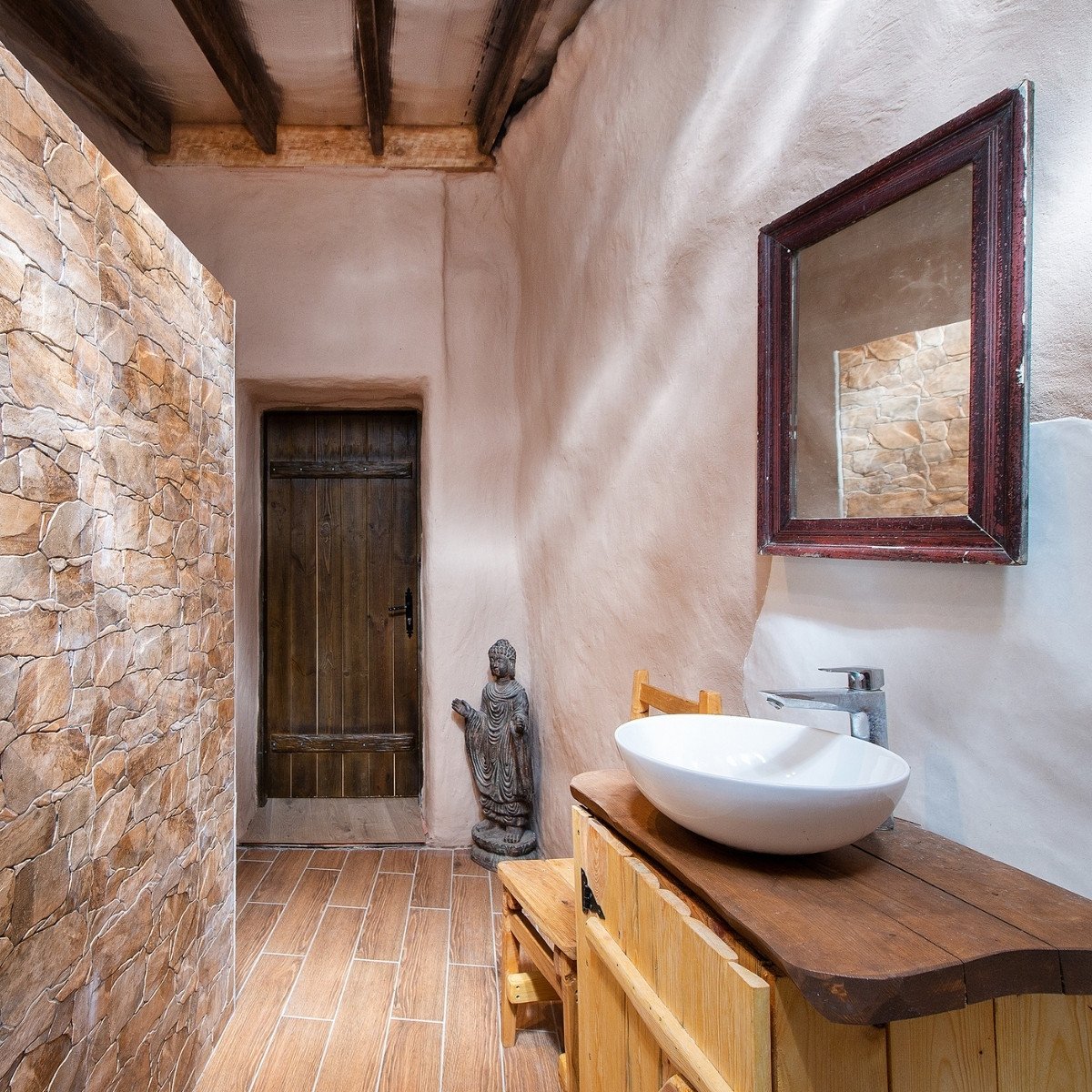
For other walls, ceilings, or areas near freestanding bathtubs or sinks — where there is no long-standing water and no intense hot steam — clay plaster can be used. In bathrooms, we recommend varnishing clay-plastered walls for practicality. If you know you will be careful and protect the surface, varnishing is not strictly necessary.
Ceilings do not need to be varnished.
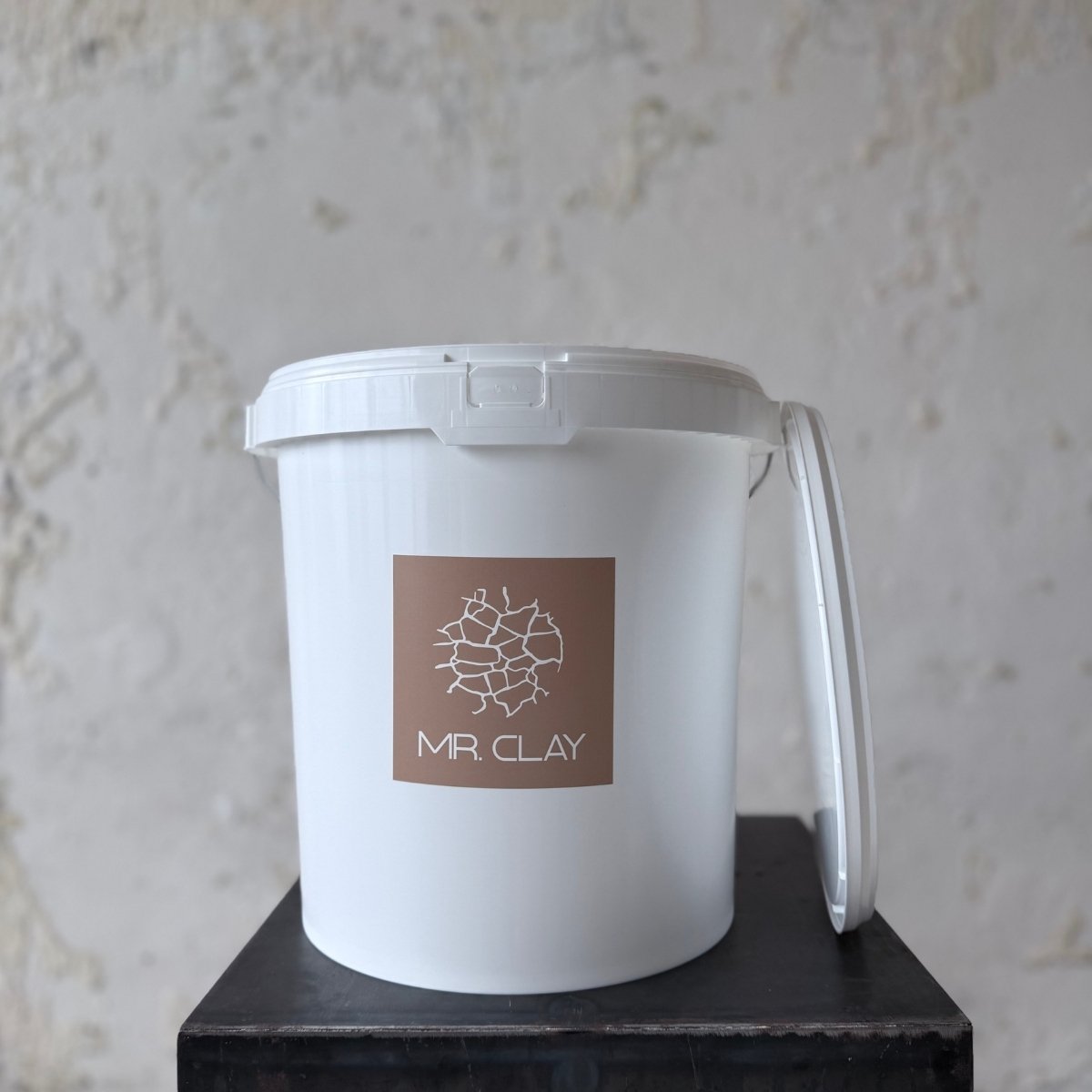
It might seem like a minor detail, but choosing the right mixing container is actually the first step toward achieving a high-quality clay plaster finish.
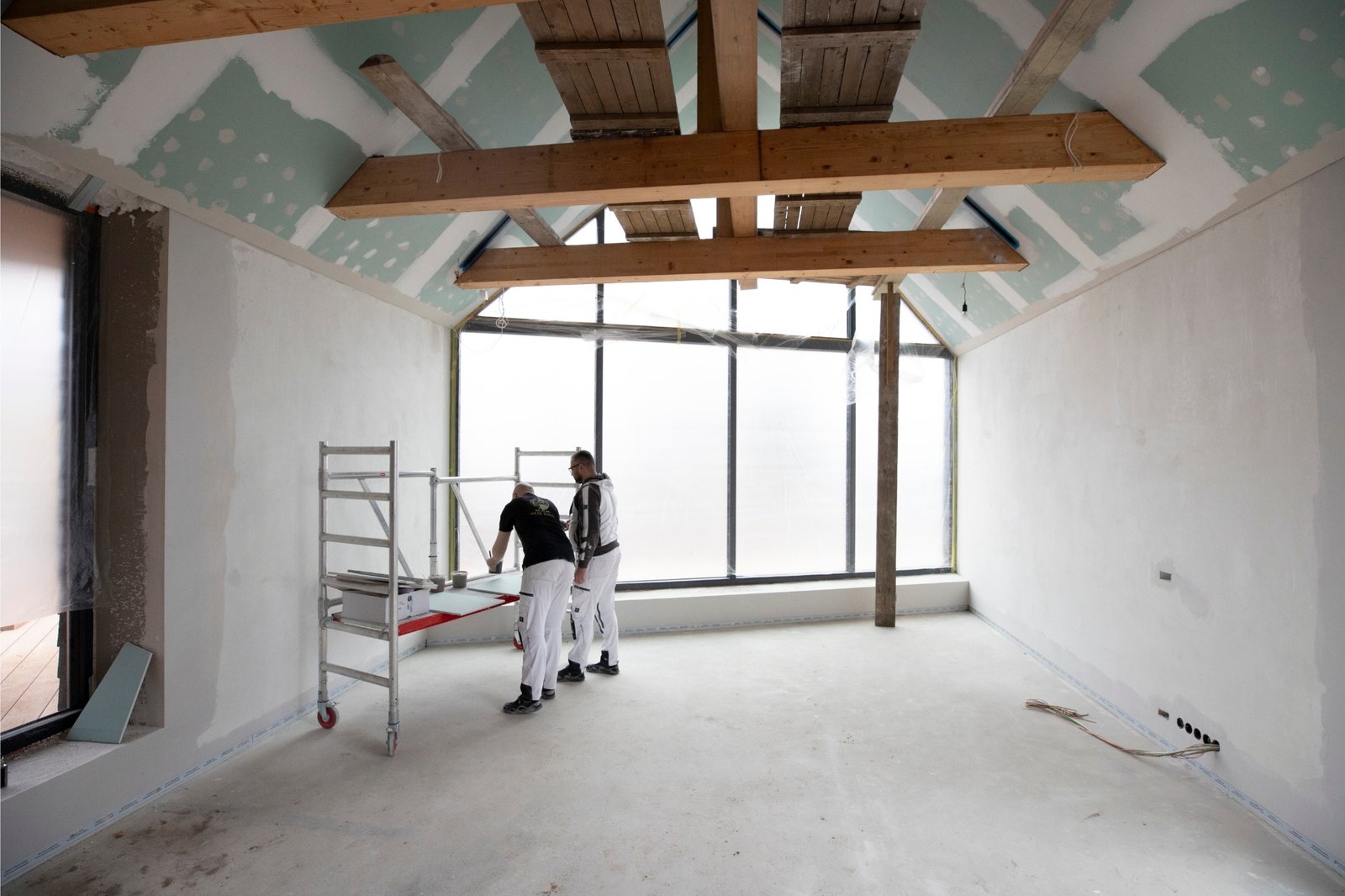
To ensure a smooth and high-quality wall finishing process, it is essential to first organize and prepare the workspace.